


Dawn Gods
4.5696.00 Reviews
App Specs
- Version
- 1.0.35
- Updated On
- License
- Free
- Downloads
- 100,000+
- Developer
- HUGENSTAR
- Categories
- Card
- Platform
- Android
Screenshots
 Analysis by AppCompare
I came away from Dawn Gods with a mixed but fairly clear impression: its mythic setting gives an idle role-playing game a pleasant sense of identity, while the card-game structure invites you to think about how your heroes fit together. That combination can suit short, regular sessions better than a game demanding constant attention. I would recommend it to players who enjoy collecting a cast and making gradual progress, but not to someone looking for a hands-on tactical card battle every time they open a game.
A mythic theme with a collection at its centre
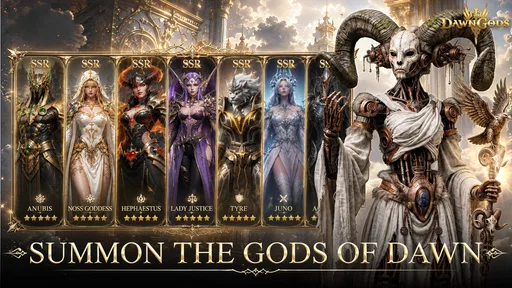
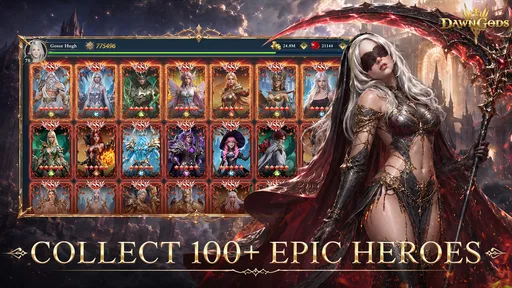
HUGENSTAR’s game puts mythic heroes at the heart of its appeal. The basic rhythm is easy to understand: summon characters, develop them, and lead them into fights as you work through a fantasy conflict. That gives each new hero a clear purpose beyond simply adding another portrait to a collection. The interesting question is whether a character can improve the team you are already building, rather than whether the character looks appealing on their own.
That makes the game more approachable than a card game built around memorizing a large set of rules before you can make meaningful choices. I can see the appeal of having a roster to shape over time, especially if I want something I can check between other parts of the day. The idle-RPG framing also signals a more gradual pace: this is about developing a team and returning to it, not demanding that every encounter become a long, high-pressure contest.
Where the decision-making matters
For me, the useful way to approach the hero-collection loop is to treat each summon as a possible change to the team, not an automatic upgrade. A new character can be exciting, but the practical value is in how that hero complements the other members and whether improving the roster serves the next obstacle. That small shift in mindset helps keep the collection side from becoming a string of disconnected acquisitions.
I would also avoid spreading development effort across every available hero just because they are new. In games built around assembling and evolving a party, concentrating attention on a smaller core is usually a more sensible way to judge progress: strengthen a team you actually use, then reconsider its balance when a new recruit offers a clear reason. It is an actionable habit, not a claim that the game requires a particular formation or offers a specific upgrade system.
That distinction matters because a collecting game can make expansion feel like progress even when the player has not made the team more effective. I would pause after a summon and ask two questions: does this hero give me a reason to adjust my lineup, and is there a current challenge that makes the adjustment worthwhile? If the answer to both is no, there is little reason to divert attention simply because a new character arrived.
How it fits into an ordinary day
A realistic use case is a brief check-in during a lunch break or while waiting for an appointment. I could open the game, review how my heroes are doing, make a considered roster decision, and leave the next longer stretch of play for later. That is a more natural fit for an idle RPG than trying to squeeze a lengthy strategy session into a moment when I may need to put my phone away without warning.
Worth Reading Before You Choose

EA SPORTS FC Mobile 26 Is a Bigger Football Game, but It Takes Time

Flipboard Shows What News Apps Must Do Beyond the Feed

Switching to Android Auto Means Rethinking Your Driving Routine

Google Calendar Makes a Crowded Week Easier to Manage

Ludo King Makes the Most of the Minutes Between Plans

Baby Panda World Brings Quick Play to Modern Phones, but Its Game Library Feels Busy
The trade-off is that this same structure may feel too passive to players who want every card choice to produce an immediate, visible tactical payoff. If I am in the mood to read an opponent, adapt turn by turn, and win through a sequence of precise decisions, a conventional head-to-head card battler would likely suit me better. Here, the satisfaction is more about shaping a growing team and watching that investment carry forward.
One practical tip is to decide what kind of session I have before opening the game. If I only have a minute, a quick check of the team’s direction is more useful than starting to explore every available option. If I have more time, I can think about whether my roster needs a different balance and whether the next step is worth pursuing. This keeps the game’s collection loop from turning every short visit into an aimless browse.
Unleashing the World of Dawn Gods
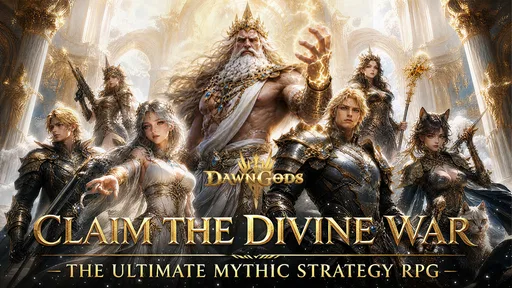
From the moment you fire up Dawn Gods, you'll be immersed in a stunning world where gods and mythical creatures roam. The graphics are pretty impressive for a mobile game, with vibrant landscapes and detailed character designs that bring the mythological theme to life. It's like stepping into a living, breathing storybook.
The game kicks off with a tutorial that gently guides you through the basics. It's intuitive and doesn't overwhelm you with information, which is a relief. You start by choosing your avatar, who will be your main character in this epic journey. The customization options are decent, allowing you to tweak your character’s appearance to your liking.
Gameplay and Strategy
Now, let's talk gameplay. At its core, Dawn Gods is about strategy and resource management. You'll be tasked with building and upgrading your own city, recruiting heroes, and assembling a team to battle against foes. The strategic element is where the game really shines. It's all about making smart decisions and planning your moves carefully.
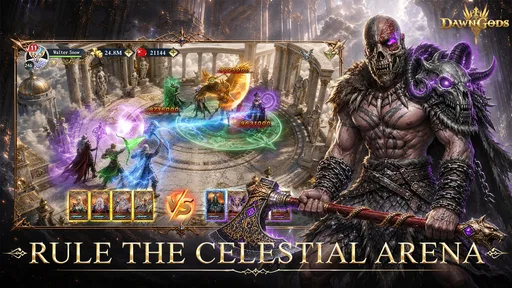
One of the coolest features is the battle system. Battles are turn-based, and you'll need to think several moves ahead to outsmart your opponents. Each hero you recruit has unique abilities, which adds a layer of depth to the combat. There’s something incredibly satisfying about executing a well-thought-out strategy and watching your plan come together on the battlefield.
Exploring Mythical Realms
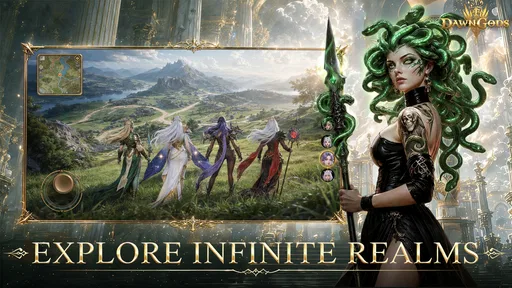
The exploration aspect of Dawn Gods is where the game truly captivates. The world map is dotted with various challenges, quests, and hidden treasures. As you progress, you'll unlock new areas to explore, each filled with its own mysteries and lore. It's easy to get lost in the adventure as you uncover ancient secrets and forge alliances with legendary figures.
Quests are varied and often tie back to well-known myths and legends, which adds a nice touch of familiarity and intrigue. Whether it's battling a fearsome hydra or negotiating with a trickster god, there's always something exciting waiting around the corner.
Community and Social Features
Another aspect of Dawn Gods that I appreciate is its community features. The game includes guilds, which allow you to team up with other players. It's a great way to strategize and work together towards common goals. Plus, there's a chat feature that makes it easy to communicate with your guildmates and form friendships within the game.
The developers frequently host events and competitions, which keep the game feeling fresh and engaging. It's clear that a lot of thought has gone into building a vibrant community around the game, and it shows.
Cost, pace, and who should play
The game is free to download, with optional in-app purchases priced from $0.49 to $749.99 per item. That wide spread is worth keeping in mind: I would treat spending as entirely optional and set a personal limit before browsing any purchase offers. A free starting point does not mean every way to speed up or expand progress will feel inexpensive, so players who prefer a strictly no-spend experience should be comfortable ignoring paid options.
There is also a useful distinction between enjoying the game and needing to keep up with everything it offers. If I am playing casually, I can focus on the heroes and challenges that interest me rather than treating every event or social activity as an obligation. Players who dislike recurring check-ins, collection-driven progression, or the temptation to spend for faster advancement may find a more self-contained card game a better match.
Its card category and idle-RPG identity put it between two familiar alternatives. Compared with a traditional deck-building game, its central pleasure is less about crafting a deck for a single tightly controlled match and more about developing a cast of heroes over time. Compared with a fully active role-playing game, it offers a lighter routine that is easier to fit around a busy day, though players seeking constant direct control may miss that involvement.
Who will get the most from it
I think it is best suited to someone who likes myth-inspired characters, steady roster development, and strategic choices that build across multiple visits. It can also work for a player who wants a mobile game that does not need to occupy an uninterrupted evening. The Teen age rating is a useful cue for families checking suitability, while the game’s purchase options are a separate reason for adults to discuss spending boundaries with younger players.
By contrast, I would steer away from it if the main attraction of card games for you is competitive play where every turn depends on reading another person’s move. I would also hesitate to recommend it to anyone who wants a story-driven game with a clearly finished endpoint, since the appeal here rests on continuing to build and use a team. If those are deal-breakers, a focused single-player card adventure or a direct multiplayer battler may be a better use of your time.
On Android, the listed minimum operating system is version 6.0, and the current release is version 1.0.30. It has an average rating of 4.5 from around 2.6 thousand ratings, with more than 10 thousand installs. Those figures suggest a game that has found an audience, but they are not a substitute for deciding whether its slower collection loop matches your own taste.
Final Thoughts
In conclusion, Dawn Gods is a delightful blend of strategy, exploration, and mythology. It's the kind of game that you can pick up for a quick session or get lost in for hours. The stunning visuals, engaging gameplay, and rich storytelling make it a standout in the crowded mobile gaming market.
If you're a fan of strategy games or have a keen interest in mythology, this game is definitely worth checking out. So why not take a leap into the world of Dawn Gods and see what adventures await? Trust me, you won't be disappointed.
My verdict
My recommendation is more measured than an unconditional endorsement. The mythic hero focus and ongoing team-building make it appealing when I want a relaxed game with some planning behind it; its idle structure and paid options mean it will not suit every card-game fan. I would give it a try if collecting and developing a roster sounds satisfying, while keeping spending optional and treating short sessions as a feature rather than expecting constant tactical intensity.
Pros
- Stunning graphics and animations.
- Engaging storyline with rich lore.
- Smooth and intuitive controls.
- Frequent updates and events.
- Diverse character customization options.
Cons
- Can be resource-intensive on devices.
- Requires constant internet connection.
- Occasional in-app purchase prompts.
- Limited offline gameplay options.
- Some features locked behind paywalls.
FAQs for Dawn Gods
What is the main objective of Dawn Gods?
Dawn Gods is a strategy game where players build and manage their own civilization, engage in epic battles, and form alliances with other players. The primary objective is to expand your territory, develop advanced technologies, and become the most powerful leader in the mythological world of gods and titans.
Is there a multiplayer mode in Dawn Gods?
Yes, Dawn Gods features a robust multiplayer mode that allows players to team up with friends or compete against others globally. You can join alliances, participate in cooperative missions, and engage in PvP battles, making strategic collaborations essential for success in the game.
What are the system requirements for Dawn Gods?
To run Dawn Gods smoothly, Android users need a device with at least Android 5.0 and 2GB of RAM, while iOS users need iOS 10.0 or later. It's recommended to have a stable internet connection for optimal gameplay, especially for multiplayer interactions and real-time battles.
Are there in-app purchases available in Dawn Gods?
Yes, Dawn Gods offers in-app purchases that enhance gameplay. Players can buy resources, special items, and premium features to accelerate progress. While purchases can provide advantages, they are not mandatory, and players can enjoy the game without spending money by focusing on strategic planning and resource management.
How does Dawn Gods handle updates and new content?
Dawn Gods regularly releases updates that include new content, bug fixes, and performance improvements. The developers are active in incorporating community feedback, ensuring that the game evolves with fresh challenges and features. Players can expect seasonal events, new missions, and expansions to keep the gameplay exciting.


